The corporate shortlist
| Aircraft | Class | Seats | Range | Connectivity | Cabin attendant |
|---|---|---|---|---|---|
| Bombardier Challenger 350 | Super Midsize Jet | up to 10 | 3,200 nm | Standard | On request |
| Cessna Citation Longitude | Super Midsize Jet | up to 12 | 3,500 nm | Standard | On request |
| Embraer Praetor 600 | Super Midsize Jet | up to 12 | 4,018 nm | Standard | On request |
| Gulfstream G280 | Super Midsize Jet | up to 10 | 3,600 nm | Standard | On request |
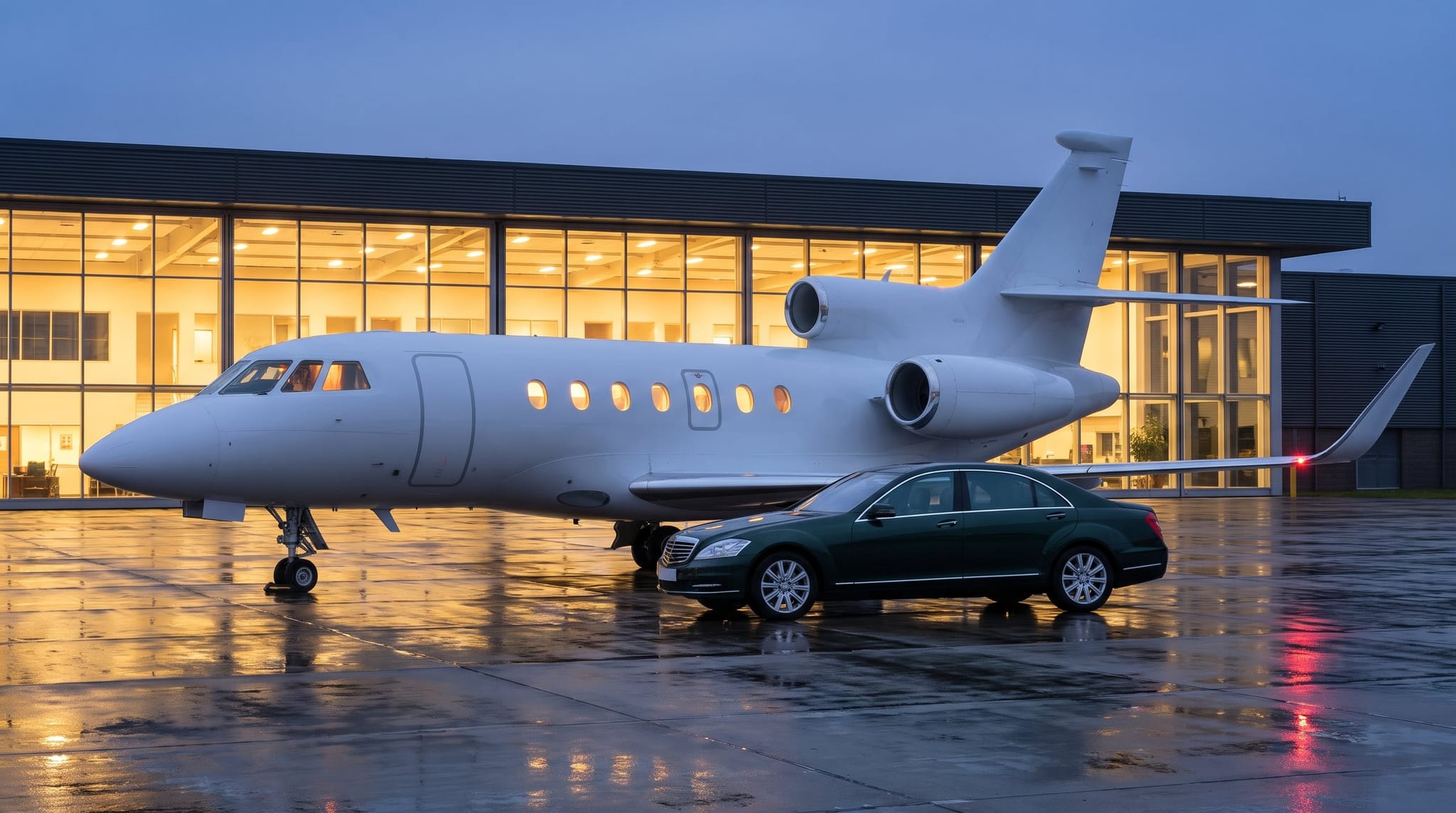
| Dassault Falcon 900LX | Heavy Jet | up to 14 | 4,750 nm | Standard | Yes |
| Bombardier Challenger 650 | Heavy Jet | up to 12 | 4,000 nm | Standard | Yes |
| Gulfstream G650ER | Ultra Long Range | up to 19 | 7,500 nm | Standard | Yes |
Manufacturer figures, rounded; range with a light load. Cabins and equipment vary by aircraft: the desk confirms the tail.
Why super midsize is the corporate standard
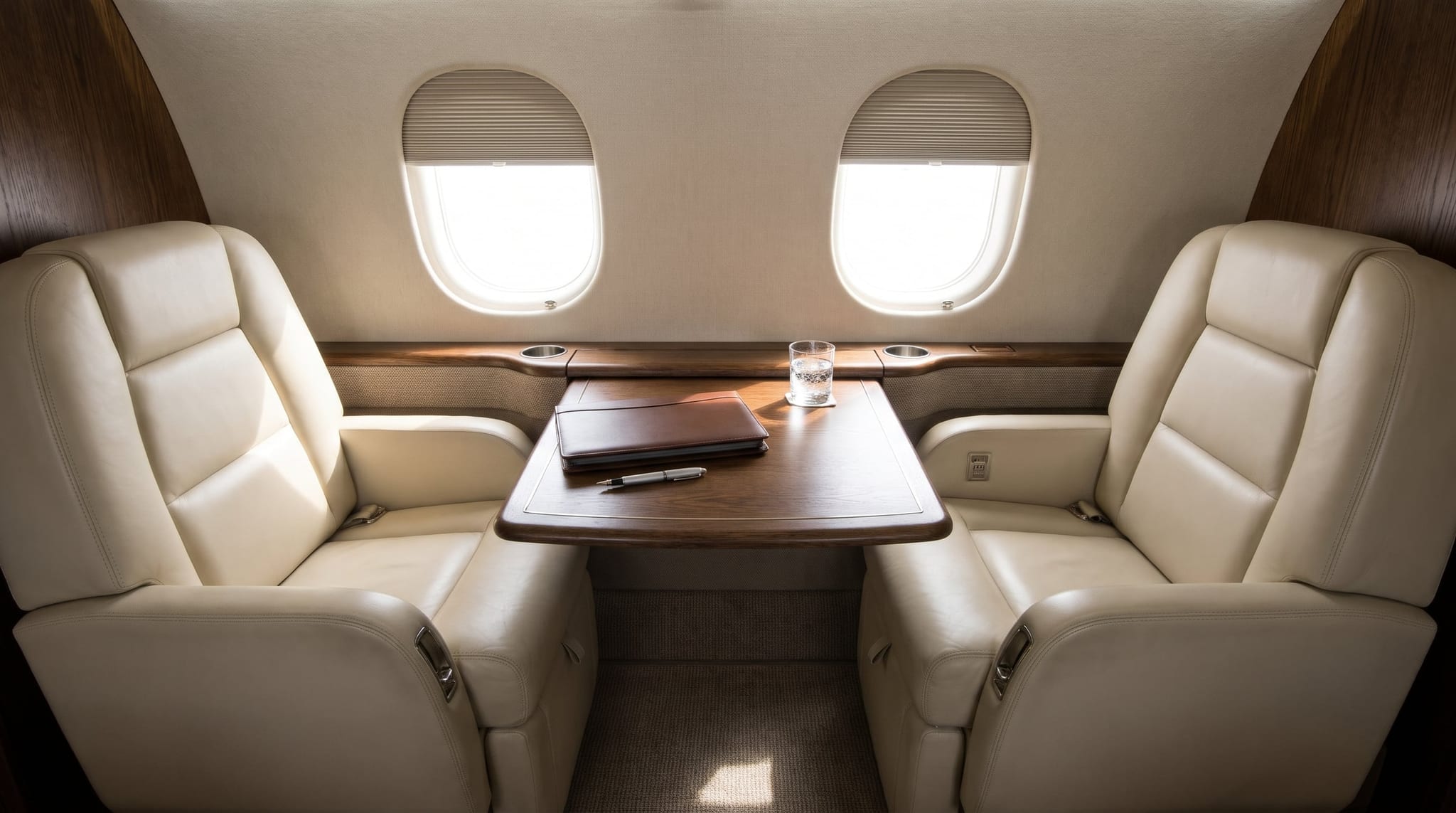
A board of six to nine people wants to stand, work at a table, use the lavatory without disturbing the meeting and land in time for dinner. The super midsize class does all of that on most business routes in Europe and North America, without the hourly cost of a heavy jet.
Heavy jets make sense for larger teams and longer days: more seats, a separate rest area and the range to reach the Gulf or cross the Atlantic with one stop less.