Summary
- Courchevel Altiport (CVF, LFLJ) sits at 2,008 m (6,588 ft) with a 537 m runway sloped at 18.6 percent, flyable only by light turboprops and helicopters with trained crews.
- Business jets arrive at Chambéry (CMF) or Geneva (GVA); the final stretch is by helicopter or car, and that choice shapes the whole first day.
- Le Jardin Alpin, the upper quarter of Courchevel 1850, holds the two tables that matter: Le 1947 à Cheval Blanc, three Michelin stars, and Le Sarkara at Le K2 Palace.
- The 2026/2027 season runs December 4, 2026 to April 18, 2027; the first week is the quietest and, for many regulars, the best.
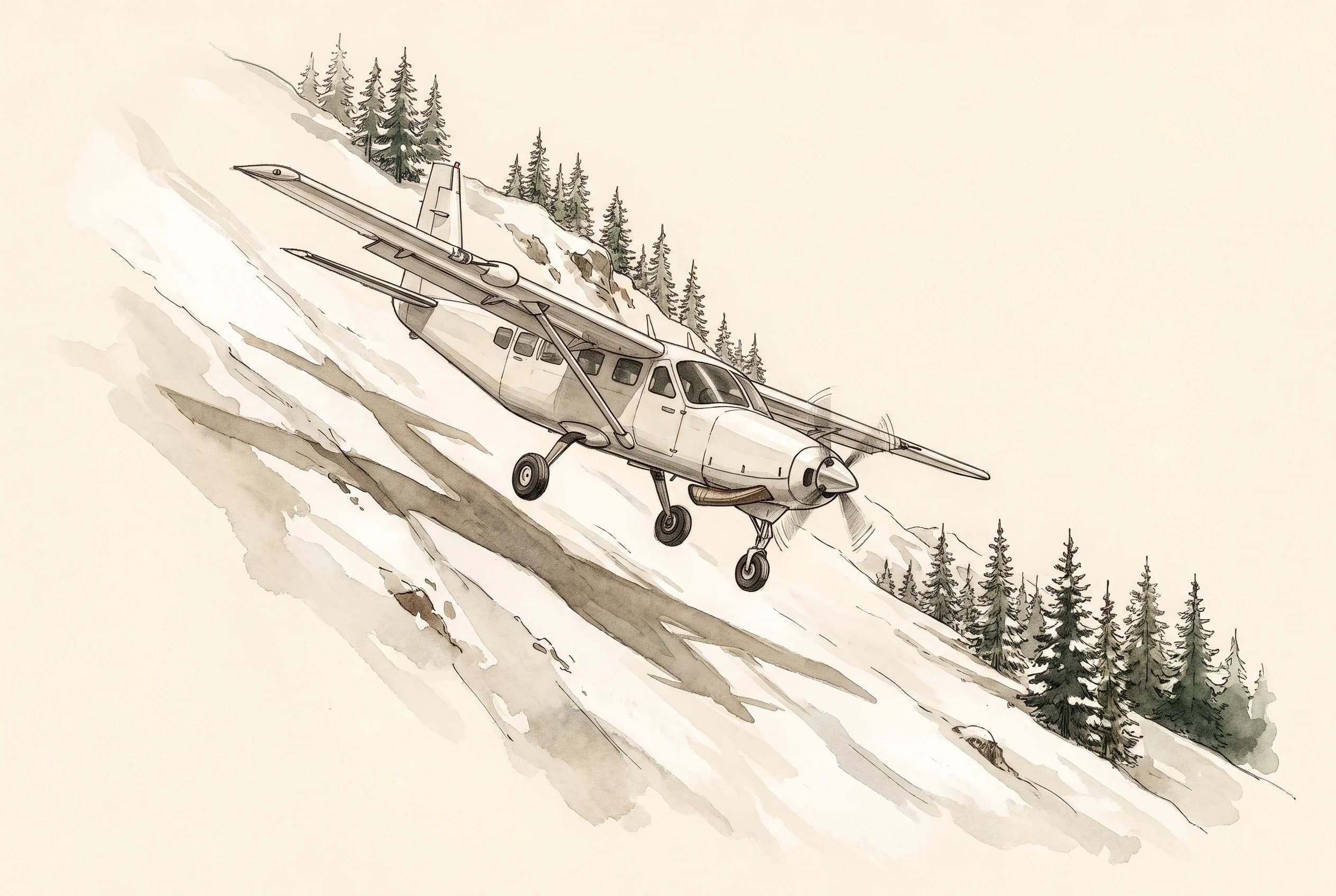
Four twenty in the afternoon, and the valley has already gone blue while the summits are still gold. A Pilatus PC-12 comes round the shoulder of the mountain with its gear down, holding a line that looks, from the apron, far too low and far too close. Then the slope rises to meet it, the wheels touch the bottom of the asphalt, and the hill itself does the braking. Ninety seconds later the propeller stops. Somebody takes off a glove to shake the captain's hand. Nobody on board says very much.
A Courchevel Altiport landing is one of the rarest arrivals in European aviation: a single 537 metre runway (1,762 ft) rising at 18.6 percent, no instrument approach, no lighting aids and no go-around once committed, which limits traffic to light turboprops such as the Pilatus PC-12 and Cessna 208 Caravan and to helicopters flown by specifically trained crews. Jets do not land there. Most private arrivals fly into Chambéry (CMF) or Geneva (GVA) and finish by helicopter or chauffeured car, which is why the last leg, not the first two hours, defines the day.
There are places you reach. Courchevel is a place that decides about you, and the deciding happens in the air.
Why is a Courchevel Altiport landing reserved for so few?
Because the airfield refuses almost everyone. Courchevel Altiport (CVF, LFLJ) has a single runway of 537 m (1,762 ft), laid at an 18.6 percent gradient at 2,008 m of elevation (6,588 ft), with no instrument approach and no lighting. It is flown by eye, in daylight, in clear air, and there is no go-around: the mountain stands where a second attempt would have to go. The decision is made minutes before the wheels arrive, and once made it is not reversible.
The result is a filter, and a quiet one. Light turboprops such as the Pilatus PC-12 and the Cessna 208 Caravan go in, along with helicopters, flown by crews current on that single piece of hillside. Everything larger stops at Chambéry or Geneva. No amount of money changes this, which is precisely what the people who care about it like. In a resort where almost anything can be arranged, the runway remains indifferent.
So the arrival splits into two tribes without anyone needing to say so. One lands on the hill in a small aircraft, in daylight, in good weather, and is in a bath by five. The other lands in a jet down in the valley and is in the same bath an hour later, having seen the Tarentaise from a helicopter window or from the back of a car with the heating already set. Neither is better. They are simply two different relationships with the idea of certainty.
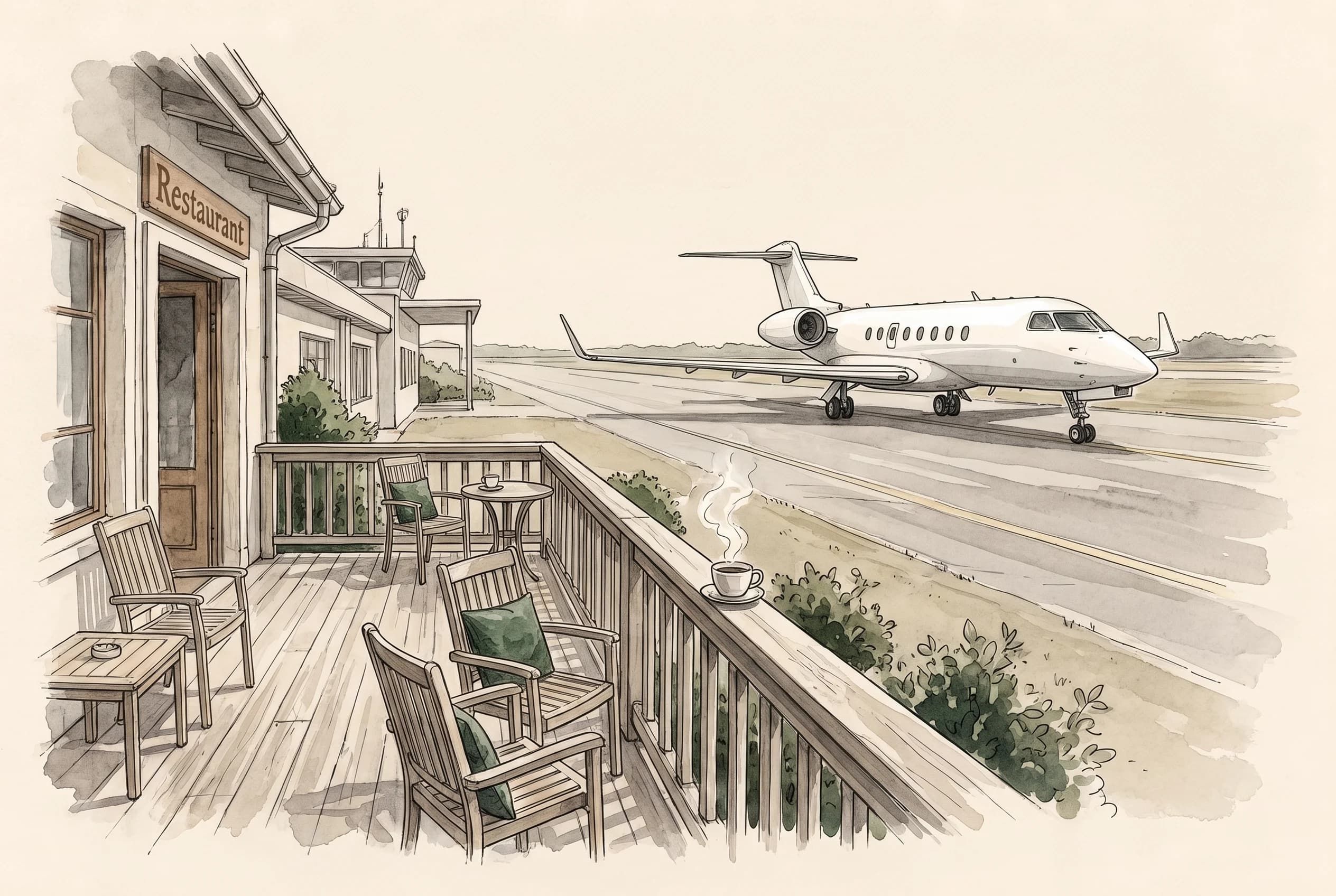
The airfield was built by Michel Ziegler in the early 1960s, one of the first of its kind in the Alps. He and his wife Martine opened a restaurant beside the runway, and it is still there, still serving, metres from where aircraft commit themselves to the slope. That detail says more about Courchevel than any ranking: the most theatrical arrival in the Alps has a family table next to it, and has done for sixty years.
The runway is the one thing in Courchevel that cannot be reserved.
Atljet Editorial
What is the rhythm of a day in Courchevel 1850?
It is slower than visitors expect and sharper than it looks. The regulars are not on the first lift. They are on the mountain between nine and half past eleven, when the piste is still groomed and the light is flat and clean, and they are off it before the day turns. The hard skiing is done in a focused two hours. Then the day opens out, and that is the part nobody writes about: the long sit-down, the sun moving across a terrace, the complete absence of anywhere else to be.
Lunch is the centre of gravity. It begins around one and is not hurried, and it is taken outdoors whenever the weather permits, because February sunshine at 1,850 metres is a serious pleasure. Skis are left standing in the snow. Jackets come off. Somebody orders a second bottle with the air of a person making a small, reasonable decision. By three the light has gone from white to honey, and the question becomes whether to ski down or to be collected.
The afternoon belongs to the body. A sauna, a long shower, an hour of nothing with the shutters half closed while the valley empties of noise. This is the hour the most practised guests protect most fiercely, and the reason they arrive by air rather than by road: a morning surrendered to a Savoyard mountain pass is not an inconvenience, it is the amputation of the best part of the first day.
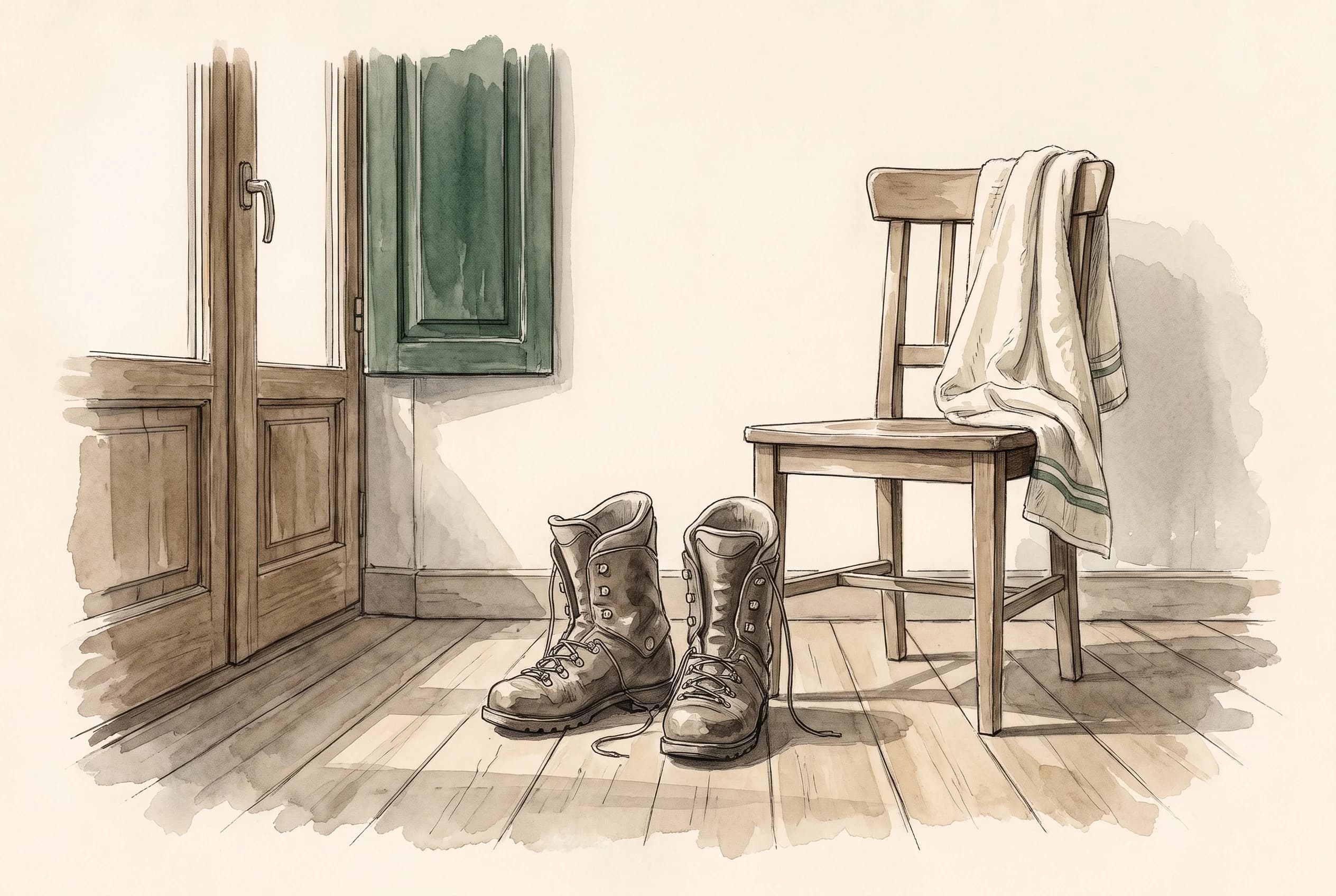
Evening arrives early and theatrically. At six the pines in Le Jardin Alpin hold the last pink of the sky, the grooming machines begin their slow climb with headlights on, and the village lights come up below. Dinner is late by mountain standards, nine or thereabouts. People dress, but quietly: cashmere, good boots, nothing that announces itself. The loudest thing in a Courchevel dining room is usually the wine list.
Where does Le Jardin Alpin keep its best tables?
Within a few minutes of each other, in the two houses at the top of the resort. Le 1947 à Cheval Blanc, inside Cheval Blanc Courchevel in Le Jardin Alpin, is the only three Michelin starred restaurant in Courchevel, led by Yannick Alléno. Le Sarkara, inside Le K2 Palace, is built, uniquely, around dessert logic applied to a full savoury progression. Two kitchens, a short walk apart, with nothing in common except seriousness.
Le 1947 is the more formal proposition and the more complete one. Alléno's cooking here is precise to the point of severity, built on sauce work and extractions, served in a room that holds very few covers and lets the mountain do the decoration. It is not a restaurant you drop into after a day on skis in a good mood. It is a reason to come down early, change properly and give the evening three hours. Tables are set weeks ahead, and in the Christmas and February windows, considerably more than weeks.
Le Sarkara is the stranger and, for some, the more memorable experience. Its kitchen begins from sugar, fruit, herbs and vegetables and builds a sequence that behaves like a tasting menu while refusing the usual order of things. It is light in a resort where lightness is rare, which makes it the clever booking for the second or third night, when the raclette of the first evening has done its damage. Both houses hold their best tables for guests in residence, which is the practical argument for sleeping where you intend to eat.
Beside the runway, the Zieglers' restaurant keeps a different register entirely: a family place at the edge of the apron, open through the season, where the view is of aircraft committing themselves to an 18.6 percent slope. Go at lunch, in good weather, and sit outside. It is the only table in the Alps where the entertainment lands.
Where do the most discreet travellers stay in Courchevel 1850?
In Le Jardin Alpin, above the village and below the pistes. This wooded upper quarter of Courchevel 1850 is where the resort keeps its quiet: no through traffic, no shopfronts, pines heavy with snow, and ski-in, ski-out access that genuinely means what it says. Cheval Blanc Courchevel sits at the top of it, a Maison rather than a hotel in character, with Le 1947 downstairs. Le K2 Palace, a few minutes away, is the other anchor, and the home of Le Sarkara.
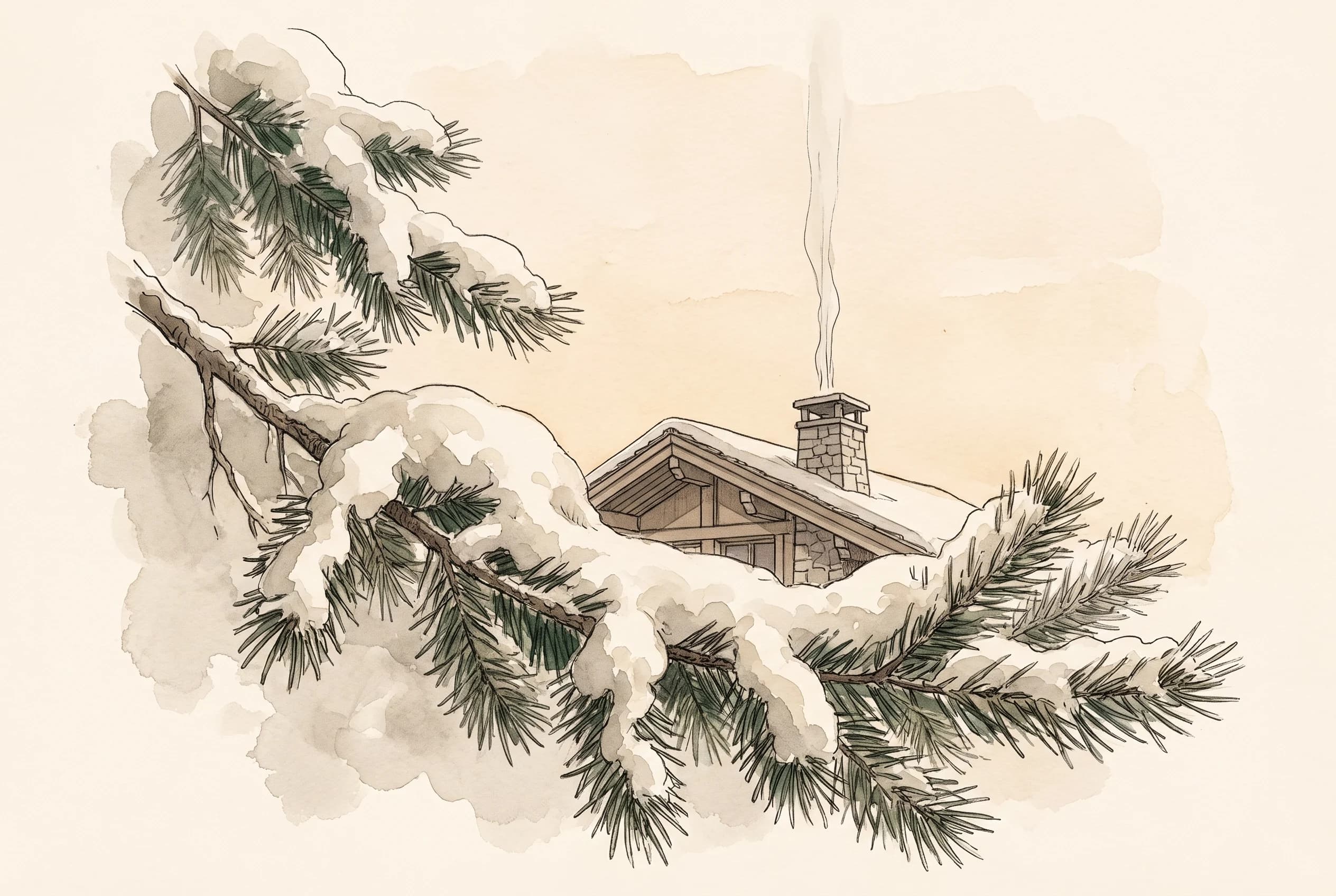
The two houses draw different guests, which is useful to know before choosing. Cheval Blanc runs calm and enclosed, suited to couples and to people who want the world to stop at the door, with a gastronomic centre of gravity. Le K2 Palace is more of a family organism, larger, warmer in register, better set up for groups moving at different speeds across a week. Both are minutes from the altiport apron, which matters more than it sounds: a helicopter landing at CVF puts you in your room before your luggage has finished arriving.
The alternative, for parties of eight or more, is a chalet with staff: a chef who shops the valley, a house manager who holds the restaurant relationships, a driver on call from seven in the morning. The good ones in Le Jardin Alpin and on the Bellecôte side are spoken for a year ahead, and the people who hold them book the next season before they leave. That is not exclusivity theatre. It is simply how a small mountain with a finite number of good addresses behaves.
The Atljet Edit
Five choices from the editors, each one a reason to set the week around it.
- Le 1947 à Cheval Blanc, Le Jardin Alpin: Courchevel's only three Michelin starred table, Yannick Alléno at full discipline, and worth giving an entire evening to.
- Le Sarkara, Le K2 Palace: a dessert-logic tasting menu, the lightest serious meal on the mountain and the right booking for night two.
- Cheval Blanc Courchevel, Le Jardin Alpin: ski-in, ski-out at the top of 1850, enclosed and quiet, minutes from the altiport apron.
- The Ziegler family's restaurant beside the runway: open since the 1960s, a table at the edge of the asphalt where lunch comes with arrivals at 2,008 metres.
- The opening week, December 4, 2026: empty pistes, fresh grooming and kitchens that still have time for you, before the season tightens.
How do private flights actually reach Courchevel?
In two stages, almost always. Because the altiport accepts only light turboprops and helicopters, business jets land at Chambéry (CMF), the closest practical arrival, or at Geneva (GVA), which offers the widest handling capacity and the deepest helicopter availability. From there the final stretch is flown by helicopter into CVF or driven up the valley by car. The jet buys you the distance; the second aircraft buys you the afternoon.
The numbers are modest for European origins. Milan Linate to Chambéry is 43 minutes of block time in a Light Jet such as a Citation CJ3, estimated at €5,400 to €6,500 one way, per aircraft, Atljet market data, October 2026. London Farnborough to Geneva is 80 minutes in a Midsize Jet such as a Citation XLS, estimated at €10,500 to €13,100 on the same basis. Paris Le Bourget to Chambéry is under an hour in almost every class. You are paying for block time, not kilometres, which is why these short Alpine sectors behave the way they do on a quote.
| Route | Class and type | Block time | Estimate, one way |
|---|---|---|---|
| London Farnborough (FAB) to Chambéry (CMF) | Midsize Jet, Citation XLS | 83 min | €10,900 to €13,500 |
| London Farnborough (FAB) to Geneva (GVA) | Super Midsize Jet, Challenger 350 | 77 min | €12,600 to €15,800 |
| Paris Le Bourget (LBG) to Chambéry (CMF) | Light Jet, Citation CJ3 | 59 min | €6,700 to €8,300 |
| Milan Linate (LIN) to Chambéry (CMF) | Light Jet, Citation CJ3 | 43 min | €5,400 to €6,500 |
| Zurich (ZRH) to Geneva (GVA) | Midsize Jet, Citation XLS | 38 min | €6,000 to €7,200 |
| Munich (MUC) to Chambéry (CMF) | Super Midsize Jet, Challenger 350 | 61 min | €10,400 to €12,900 |
| Dubai (DXB) to Geneva (GVA) | Ultra Long Range, Gulfstream G550 | 372 min | €94,000 to €127,500 |
Two things govern a winter quote more than anything else. The first is positioning: in late December and February the Alps absorb an extraordinary number of aircraft, and the empty sector your jet flies to reach you, or to leave afterwards, is often the largest single line. The second is weather, since CVF asks for daylight and clear air, so a helicopter leg into the altiport is always planned with a road alternative behind it. Our point to point charter desk builds both into the same booking, and the helicopter fleet is sized for the last leg rather than the first two hours. For the logic in full, see how it works and our note on helicopter or car on the Italian lakes, which makes the same argument in warmer weather.
Airports
Arriving by air
Courchevel Altiport (CVF) accepts light turboprops and helicopters only, in daylight and in visual conditions, so a business jet arrival means Chambéry or Geneva followed by a short second leg. Chambéry is the closest and the quietest; Geneva has the broadest handling and helicopter capacity, and suits long range arrivals from the Gulf and North America. The Atljet flight desk can arrange the last stretch as well, whether that is a helicopter into the altiport or a chauffeured car up the valley.
- CMF
- Chambéry-Savoie Airport (LFLB)The closest practical arrival for a business jet, and the calmest choice in peak weeks; short onward leg by helicopter or car.
- GVA
- Geneva Airport (LSGG)The widest handling capacity and the deepest helicopter availability, best for long range arrivals and large parties.
- CVF
- Courchevel Altiport (LFLJ)Light turboprops such as the Pilatus PC-12 and helicopters only, in daylight and good visibility, minutes on foot from Le Jardin Alpin.
| From | Distance | Light jet | Midsize jet | Heavy jet |
|---|---|---|---|---|
| London (FAB to CMF) | 455 nm (843 km) | 1h 28m, €9,000 to €11,400 | 1h 23m, €10,900 to €13,500 | 1h 19m, €16,100 to €21,500 |
| Paris (LBG to CMF) | 258 nm (478 km) | 0h 59m, €6,700 to €8,300 | 0h 56m, €7,900 to €9,700 | 0h 54m, €11,600 to €15,300 |
| Milan (LIN to CMF) | 152 nm (282 km) | 0h 43m, €5,400 to €6,500 | 0h 41m, €6,300 to €7,600 | 0h 40m, €9,100 to €11,800 |
| Zurich (ZRH to CMF) | 164 nm (304 km) | 0h 45m, €5,500 to €6,800 | 0h 43m, €6,500 to €7,900 | 0h 41m, €9,300 to €12,000 |
| Munich (MUC to CMF) | 309 nm (572 km) | 1h 06m, €7,200 to €9,000 | 1h 03m, €8,700 to €10,700 | 1h 00m, €12,700 to €16,800 |
| Dubai (DXB to CMF) | 2,819 nm (5,221 km) | Not non stop | Not non stop | 6h 28m, €71,700 to €97,900 |
Useful references: the resort's own calendar and address list sit on the Courchevel official tourism site, and the current star ratings for Le 1947 and Le Sarkara are published by the MICHELIN Guide.
On the last afternoon the sequence runs in reverse, and it is better. The PC-12 turns at the top of the slope, runs down the 18.6 percent and is simply gone, dropped into the valley like a stone into water, the engine note thinning over the pines. Below the apron, somebody at the Zieglers' table does not even look up: at 2,008 metres, the extraordinary thing is that this happens every clear day of the season, and has done since the sixties. You take off a glove, shake a hand, and keep the rest to yourself.
Questions people ask
- Why is Courchevel Altiport considered so difficult?
- The runway is 537 m (1,762 ft) long, rises at 18.6 percent, sits at 2,008 m (6,588 ft) and has no instrument approach or lighting aids. There is no go-around once the approach is committed, because the terrain closes in behind the aircraft. The approach must be flown visually, in good weather, by a crew current on that specific airfield.
- Can a private jet land at Courchevel?
- No. The altiport handles light fixed-wing aircraft such as the Pilatus PC-12 and Cessna 208 Caravan, plus helicopters. Business jets of every class arrive at Chambéry (CMF) or Geneva (GVA), and the last stretch is flown by helicopter or driven.
- Which airport should I fly into for Courchevel?
- Chambéry (CMF) is the closest practical arrival for a business jet and the quietest option in high season. Geneva (GVA) offers the widest handling capacity and the most helicopter availability, and suits long range arrivals from the Gulf or North America.
- Where do discreet travellers stay in Courchevel 1850?
- In Le Jardin Alpin, the wooded upper quarter. Cheval Blanc Courchevel and Le K2 Palace are the two anchors: ski-in, ski-out, a few minutes from the altiport apron, and both home to the resort's most serious kitchens.
- When does the Courchevel season run?
- The confirmed 2026/2027 winter season runs from December 4, 2026 to April 18, 2027. The opening week and the first half of January are the calmest periods on the mountain.
Questions on this guide? The flight desk answers within the hour.
Request options