Summary
- Mid September to early November is the quiet season: sea still warm, gulf water empty, village rhythms restored.
- Stay by zone rather than by address: the harbour quarter for walking, the Ramatuelle hills for silence, the vineyard country inland for harvest.
- The MICHELIN tables that matter stay open into autumn, and October bookings are reachable in a way August bookings never are.
- La Môle (LTT) is the direct arrival, 15 kilometres (8 nautical miles) from the village; Nice (NCE) is the alternative with a short helicopter or chauffeured leg.
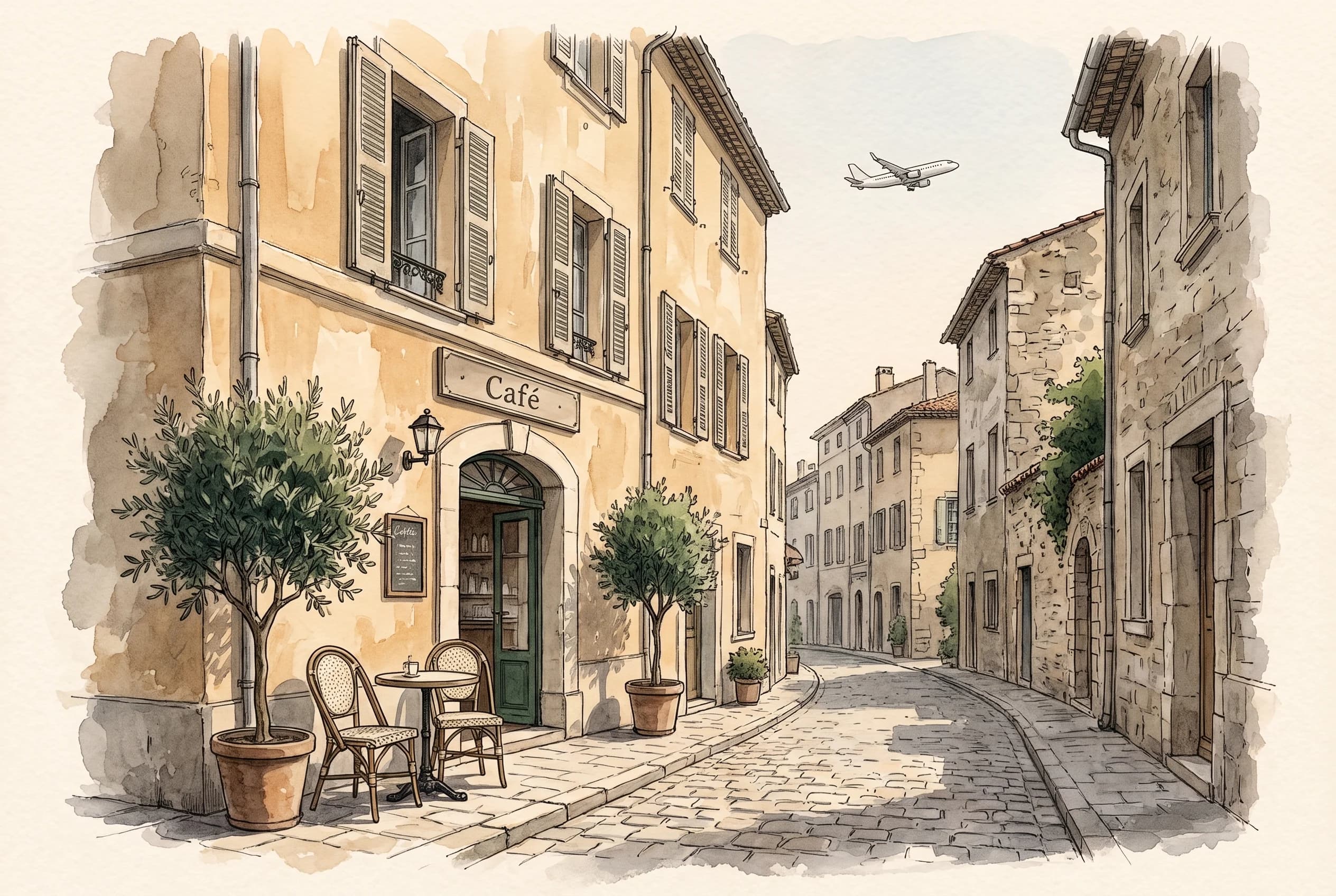
Seven forty in the morning, Place des Lices, the second week of October. A man in a navy fleece is setting out crates of figs under the plane trees, unhurried, talking to the woman at the next stall about nothing. The boules pitch is wet from the night. Two shutters open above the square. By the harbour, a few streets away, the water is flat and the quay is almost bare: a fisherman coiling line, one varnished hull taking on fuel. The café on the corner has three tables occupied and they are all locals. Nobody is waiting for anything.
Saint-Tropez in autumn, from mid September through early November, is the version of the village that residents keep for themselves: warm sea, empty gulf water, tables that answer the telephone, and vineyards at harvest just inland. The crowds thin after the third week of August and the light softens into the amber that drew the painters here in the first place. Flights into La Môle (LTT) put you in the village after a drive of roughly twenty minutes, with Atljet market data for October 2026 estimating a Light Jet from Geneva at €5,900 to €7,200 one way.
Saint-Tropez in autumn, from mid September through early November, is the version of the village that residents keep for themselves: warm sea, empty gulf water, tables that answer the telephone, and vineyards at harvest just inland. The crowds thin after the third week of August and the light softens into the amber that drew the painters here in the first place. Flights into La Môle (LTT) put you in the village after a drive of roughly twenty minutes, with Atljet market data for October 2026 estimating a Light Jet from Geneva at €5,900 to €7,200 one way.
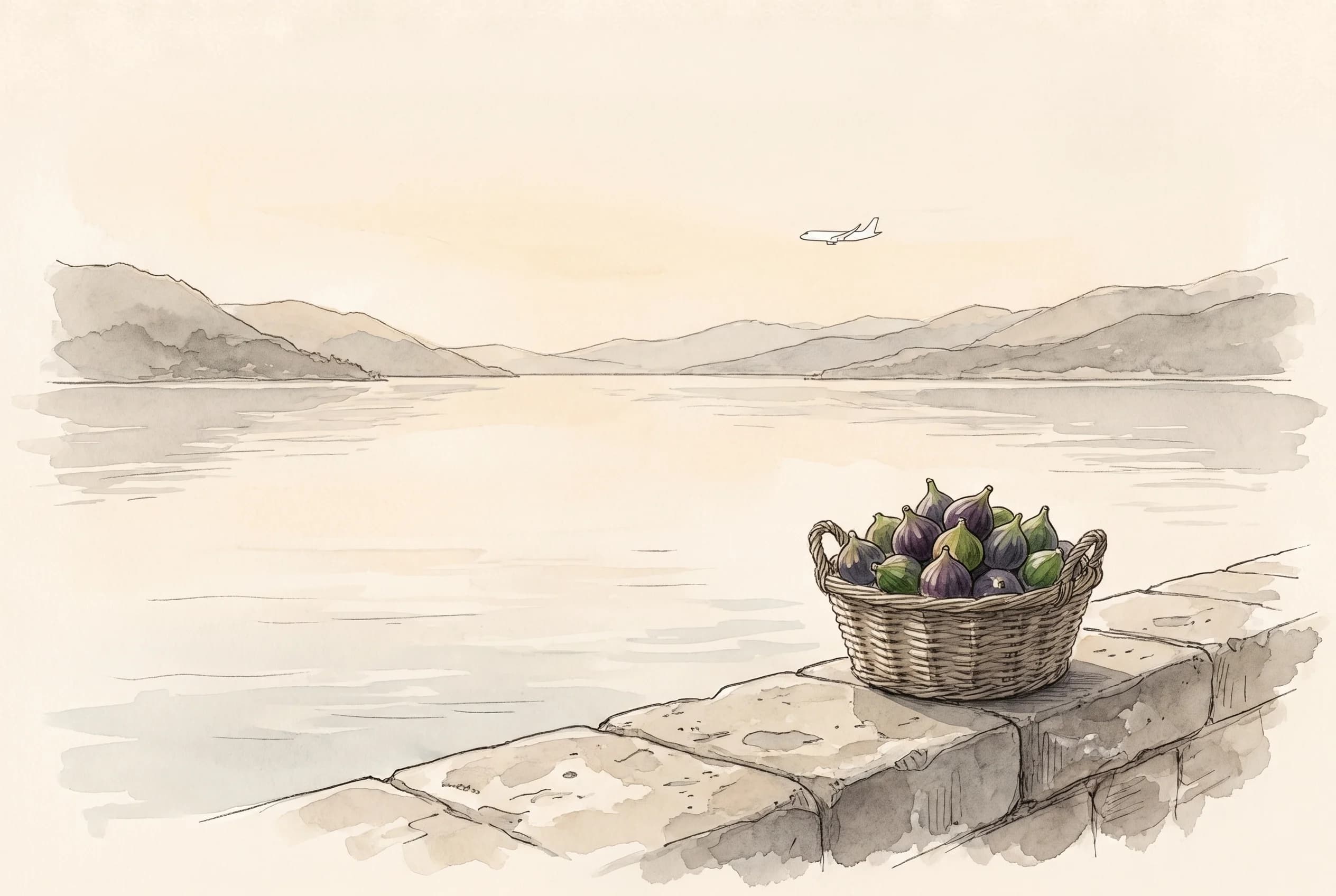
Why does Saint-Tropez empty out after August?
Because the summer here is an occupation, and occupations end. By the first week of September the charter yachts have gone east toward Sardinia or north to be laid up, the villas rented by the fortnight release their last guests, and the road from the autoroute, which in August is a slow brown river of cars, becomes simply a road again. What is left is a village that was a fishing port and a painters' colony long before it was anything else, and it reverts to that condition with surprising speed, almost gratefully.
The light does most of the work. Summer light here is flat and white, a glare off water and sand that erases detail. Autumn light comes in low from the southwest and finds the ochre and rose renders of the houses along the Ponche, the old fishermen's quarter, and holds them for two hours each evening. The mistral, when it arrives, scours the sky to a hard clean blue and flattens the gulf to glass. The painters who made this village famous were after exactly this: not the glare of August, but the hour when the air cools and the colour comes back.
The daily rhythm resets with it. The market at Place des Lices takes the square on Tuesday and Saturday mornings, and in October it sells to people who will cook that evening: olives, the last tomatoes, mushrooms from the Maures hills behind the village, socca batter, knives, linen. By eleven the square is quiet. Lunch stretches. The sea stays warm into the second half of October, warmer than the air by the middle of the month, which is the particular autumn pleasure of this coast: swimming off an empty beach with the hills already dark green and the vines turning rust.
Where to stay in Saint-Tropez in autumn?
Choose by zone, not by reputation, because in autumn the zones behave very differently. Three options present themselves: the village itself, the Ramatuelle hills above Pampelonne, and the vineyard country inland toward La Croix-Valmer and Gassin. Each gives a distinct autumn, and the one that suits you depends entirely on whether you want to walk out of the door into a street or into silence.
The harbour quarter and the Ponche are for those who want the village as a village. You wake to shutters and gulls, you walk to the market in a few minutes and to the Citadelle in a few more, and dinner does not require a car. Hôtel Byblos sits a short walk up from the port with Les Caves du Roy, Il Giardino, the Skybar and a Spa by Sisley within its own walls, which matters on an October evening when the wind has got up. Hôtel de Paris Saint-Tropez, open since 1931, keeps what it describes as the only rooftop venue in the village, and in autumn that roof at six in the evening is one of the best seats on this coast.
The Ramatuelle hills are for silence. Up among the umbrella pines and the dry-stone terraces, a short drive from the village, the properties look south over Pampelonne and in October you can watch a long crescent of sand hold a handful of people. La Réserve Ramatuelle is here, and with it La Voile, which carries two MICHELIN stars. The trade is obvious and worth making: you drive to dinner, but you sleep in absolute quiet and wake to a view that in August would be an endurance test.
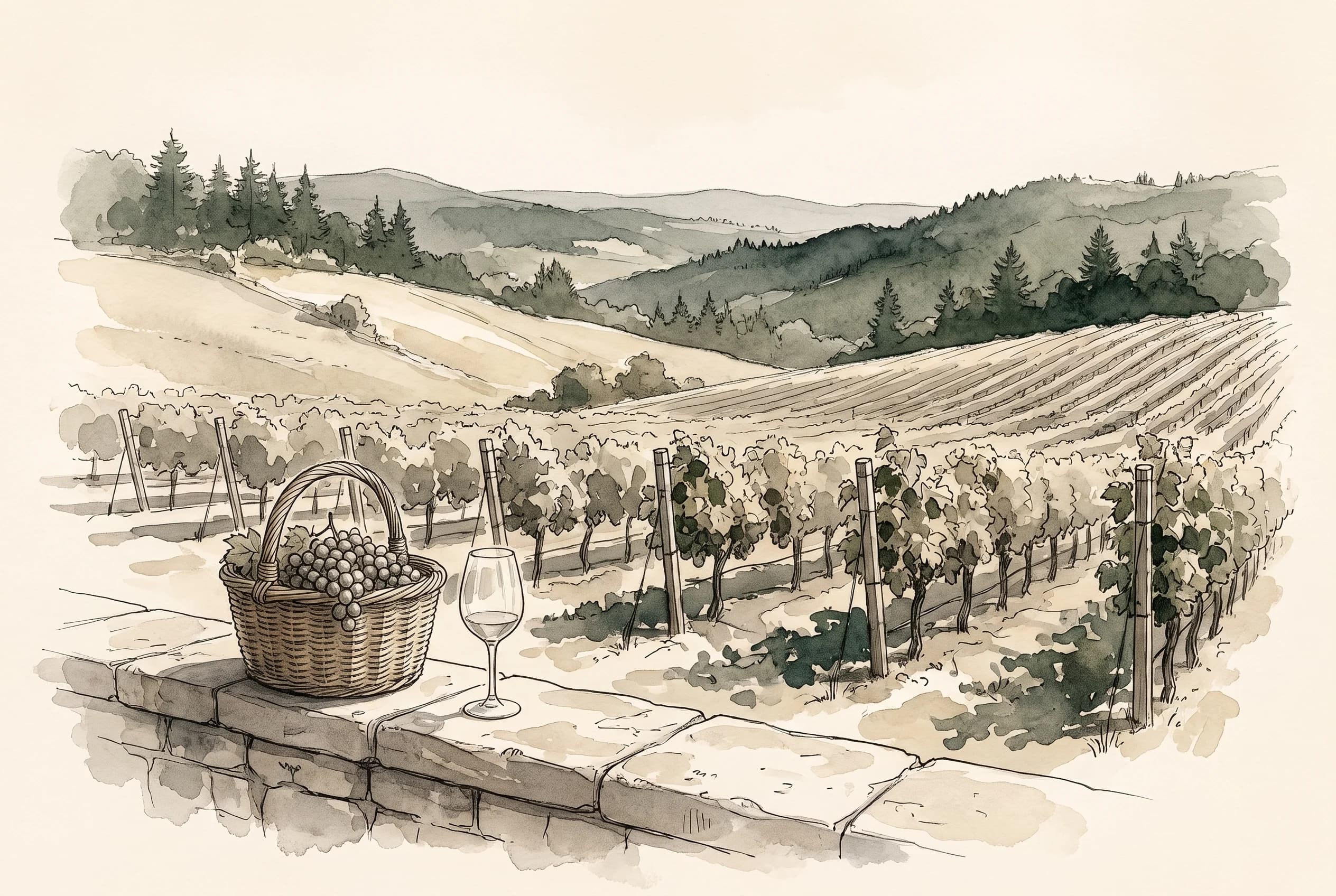
Inland is the third Saint-Tropez, and the least expected. The country between Gassin, La Croix-Valmer and the Maures foothills is working vineyard, and in late September and early October it is in harvest. A handful of estates here keep rooms among the palms and the vines. Staying in that landscape means waking to the smell of fermentation rather than salt, driving down to the sea when you want it, and understanding that Saint-Tropez was agricultural long before it was fashionable.
What is there to do once the crowds leave?
The gulf, chiefly, and the vines. In autumn the water between Saint-Tropez and Sainte-Maxime is empty in a way that August visitors would not believe: no wake, no anchor chains, no music carried across from the next deck. A private boat with a skipper for a morning gives you the coast as the painters saw it, the Baie des Canoubiers with its cypresses and pale villas, the headland at Cap Camarat, the long sweep of Pampelonne with nobody on it. Go early, before ten, while the water is still oiled flat and the light is coming in from the east across the Esterel.
Inland, the harvest is the event nobody advertises. Domaine de la Croix, a cru classé estate at La Croix-Valmer, receives visitors by appointment for tastings, a cellar visit and a walk through the vines, and the appointment is the point: in autumn you get the winemaker's attention rather than a tasting counter. Ask to go in the week after picking, when the cellar is loud and smells of fruit and the previous vintage is being drawn for assessment. A short drive from the harbour and an entirely different country.
- Walk the Citadelle quarter in the hour before sunset, up through the lanes behind the Ponche to the hexagonal fortress and its view over the gulf toward the Alps.
- Swim off Pampelonne in mid October, when the sea is warmer than the air and the beach belongs to three people and a dog.
- Take the Place des Lices market on a Tuesday, late enough to see it serving the village rather than performing for anyone.
- Book a skippered boat for the Baie des Canoubiers at eight in the morning, when the water is still glass.
- Visit a cru classé cellar by appointment in the week after harvest, for the noise and the smell of it.
There is also the autumn regatta, Les Voiles de Saint-Tropez, which briefly refills the harbour with classic hulls and carbon racers and gives the village a week of genuine spectacle. Dates move from year to year and are set by the organisers, so confirm before you plan around it. If you prefer the quiet version of autumn, come the fortnight after: the yachts leave, the bunting comes down, and October settles back into itself.
Where to eat in Saint-Tropez this season?
Autumn is when the best tables in Saint-Tropez become reachable. The rooms that in August require patience and leverage will, in October, answer the telephone and offer you Thursday. The Guide MICHELIN lists a remarkable concentration here for a village of this size: La Vague d'Or at Cheval Blanc St-Tropez holds three stars and La Voile at La Réserve Ramatuelle holds two, with further starred kitchens in the village and in the hills behind it.
What changes in autumn is not only availability but the cooking. The Mediterranean gives up its best fish as the water cools, the Maures hills produce mushrooms and chestnuts, the last of the figs come down from the trees above Gassin, and the olive harvest begins in November. Menus that in summer lean on tomato and courgette flower turn darker and deeper. Ask for the table by the window rather than the terrace: October evenings here are warm at seven and cool at ten, and the view across the gulf with the lights of Sainte-Maxime coming on is worth the glass between you and it.
The Atljet Edit
Five autumn choices in and around Saint-Tropez, each verified, each for a reason.
- La Vague d'Or, Cheval Blanc St-Tropez: three MICHELIN stars on the water's edge, and in October you can actually get in.
- La Voile, La Réserve Ramatuelle: two stars with the whole gulf below the terrace, best at the hour the light goes amber.
- Domaine de la Croix, La Croix-Valmer: a cru classé estate that receives by appointment, which in harvest week means the winemaker and the cellar to yourself.
- The rooftop at Hôtel de Paris Saint-Tropez: the only one in the village, open since the house itself opened in 1931, and the right place for the first drink of an autumn evening.
- Spa by Sisley at Hôtel Byblos: the correct answer to a day of mistral, with Les Caves du Roy and Il Giardino in the same building when the wind drops.
The village does not perform in October. It simply gets on with its year, and lets you watch.
Atljet Editorial
How do you fly into Saint-Tropez?
La Môle, Saint-Tropez (LTT) is the arrival that makes sense: 15 kilometres (8 nautical miles) southwest of the village, operated by Aéroports de la Côte d'Azur, and a drive of roughly twenty minutes through the Maures foothills to the harbour. It suits light and midsize aircraft, and it is the difference between landing and being at lunch, and landing and beginning a journey. For larger aircraft, Nice Côte d'Azur (NCE) takes everything and hands you a short helicopter leg along the coast or a chauffeured hour through the hills.
The numbers are short. Atljet market data for October 2026 estimates a Light Jet from Geneva to La Môle at 49 minutes of block time and €5,900 to €7,200 one way, and the same class from Milan Linate at 49 minutes and €5,900 to €7,200. From London Farnborough a Midsize Jet runs 1 hour 44 minutes and €13,100 to €16,400. These are market estimates, one way, per aircraft, and they move with routing, wind, fuel, airport charges and where the aircraft has to come from. You pay for time, not distance. Point to point charter is the simple structure for a weekend like this one, and the light jet class is usually the right instrument for the trip.
| Route | Class | Aircraft | Block time | Estimate, one way |
|---|---|---|---|---|
| Geneva (GVA) to La Môle (LTT) | Light Jet | Citation CJ3 | 49 min | €5,900 to €7,200 |
| Milan Linate (LIN) to La Môle (LTT) | Super Midsize Jet | Challenger 350 | 45 min | €8,200 to €10,000 |
| Zurich (ZRH) to La Môle (LTT) | Midsize Jet | Citation XLS | 1 h 00 min | €8,400 to €10,300 |
| Paris Le Bourget (LBG) to La Môle (LTT) | Light Jet | Citation CJ3 | 1 h 21 min | €8,500 to €10,600 |
| Munich (MUC) to La Môle (LTT) | Midsize Jet | Citation XLS | 1 h 16 min | €10,100 to €12,500 |
| London Farnborough (FAB) to La Môle (LTT) | Midsize Jet | Citation XLS | 1 h 44 min | €13,100 to €16,400 |
Airports
Arriving by air
La Môle, Saint-Tropez (LTT) is the direct arrival for the village, 15 kilometres (8 nautical miles) away and roughly twenty minutes by car. Nice Côte d'Azur (NCE) and Cannes (CEQ) are the alternatives for larger aircraft or for a coastal approach. The Atljet flight desk can arrange the last stretch too, whether that is a chauffeured car from La Môle, a helicopter from Nice or a skippered motorboat across the gulf.
- LTT
- La Môle, Saint-Tropez AirportThe direct option for light and midsize aircraft, roughly twenty minutes from the harbour by car.
- NCE
- Nice Côte d'Azur AirportFor larger aircraft and long-range arrivals, with a helicopter or chauffeured leg onward along the coast.
- CEQ
- Cannes Mandelieu AirportA useful western alternative if you are combining Saint-Tropez with the Cannes and Antibes side of the bay.
| From | Distance | Light jet | Midsize jet | Heavy jet |
|---|---|---|---|---|
| London (FAB to LTT) | 601 nm (1,113 km) | 1h 50m, €10,800 to €13,800 | 1h 44m, €13,100 to €16,400 | 1h 38m, €19,500 to €26,200 |
| Paris (LBG to LTT) | 407 nm (754 km) | 1h 21m, €8,500 to €10,600 | 1h 17m, €10,200 to €12,600 | 1h 13m, €15,000 to €20,000 |
| Geneva (GVA to LTT) | 194 nm (359 km) | 0h 49m, €5,900 to €7,200 | 0h 47m, €7,000 to €8,500 | 0h 45m, €10,000 to €13,000 |
| Milan (LIN to LTT) | 191 nm (354 km) | 0h 49m, €5,900 to €7,200 | 0h 47m, €7,000 to €8,500 | 0h 45m, €10,000 to €13,000 |
| Zurich (ZRH to LTT) | 286 nm (530 km) | 1h 03m, €7,000 to €8,700 | 1h 00m, €8,400 to €10,300 | 0h 57m, €12,200 to €16,000 |
| Munich (MUC to LTT) | 403 nm (746 km) | 1h 20m, €8,400 to €10,500 | 1h 16m, €10,100 to €12,500 | 1h 13m, €15,000 to €20,000 |
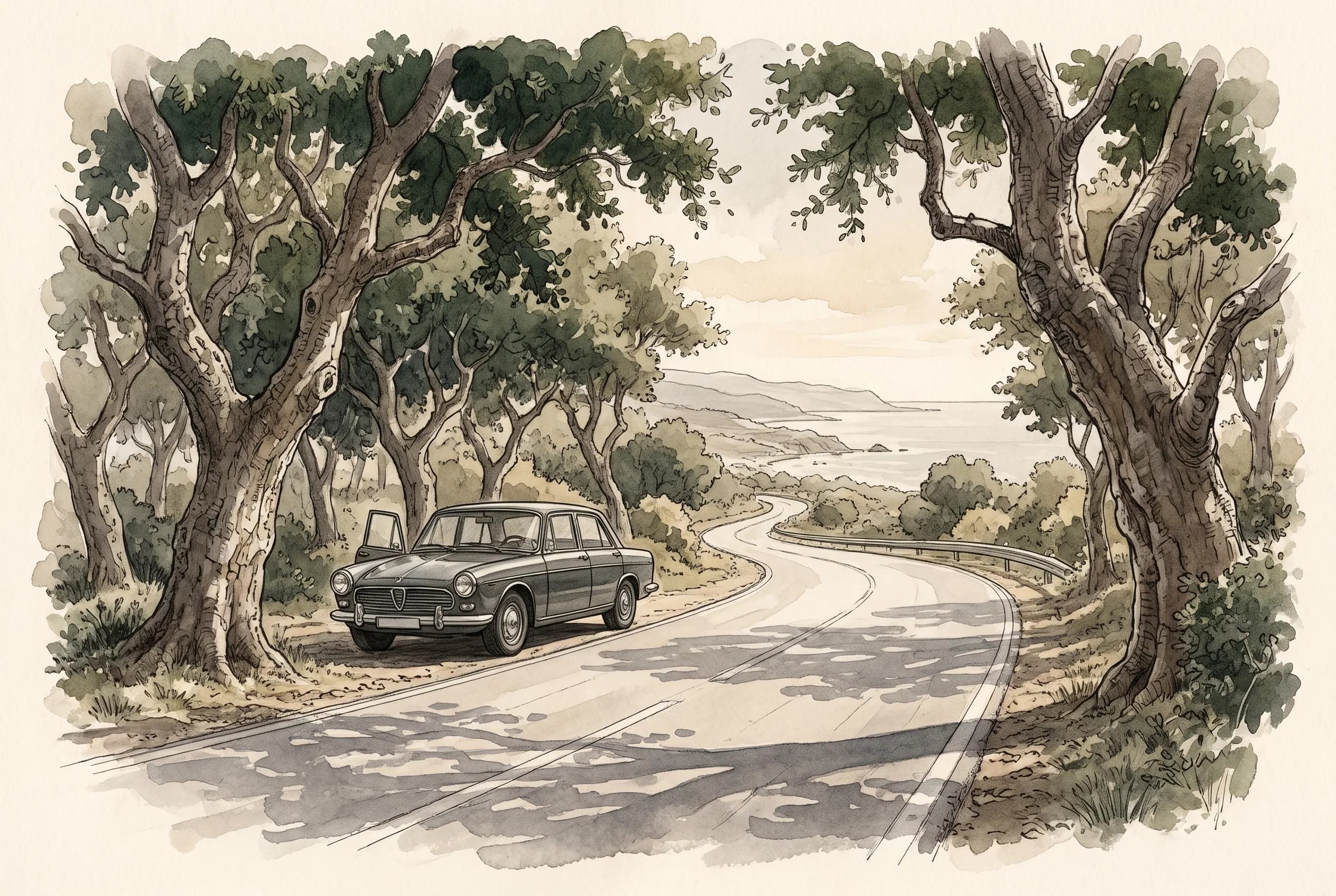
The last stretch deserves the same attention as the flight. From La Môle, the road to the village is twenty minutes of cork oak and vine with a car and a driver waiting at the aircraft. From Nice, the helicopter leg along the coast is the one worth taking, over the Esterel and the red rock into the gulf, and it turns a tiring hour into a short pleasure. The same logic applies elsewhere on this coast and on the Italian lakes, as we set out in helicopter or car, Milan to Portofino. If you want to see how the whole arrangement works end to end, it is written out plainly.
Come back to Place des Lices at seven forty on an October morning. The figs are out, the shutters are opening one at a time, and the village is simply doing what it does when nobody is watching. That is the thing worth flying for.
Questions people ask
- When is the best time to visit Saint-Tropez?
- Mid September to early November. The sea holds summer warmth into October, the village is walkable again, and restaurants, vineyards and boats are available at short notice. Late May and early June are the spring equivalent, slightly cooler in the water.
- Is Saint-Tropez quiet in autumn?
- Yes, markedly so from the second week of September, with the exception of the days of the autumn regatta, when the harbour fills with classic yachts. October is the quietest month with reliably warm weather, and the Place des Lices market returns to serving the village rather than the visitors.
- What airport do you fly into for Saint-Tropez?
- La Môle, Saint-Tropez (LTT), 15 kilometres (8 nautical miles) southwest of the village and operated by Aéroports de la Côte d'Azur. Nice Côte d'Azur (NCE) is the alternative for larger aircraft, with a helicopter or chauffeured leg onward.
- How do you get from Nice to Saint-Tropez?
- By helicopter over the coast, the most elegant and the fastest option, or by chauffeured car along the coast road and through the Maures hills. The Atljet flight desk arranges either leg as part of the booking.
- Where to eat in Saint-Tropez in autumn?
- La Vague d'Or at Cheval Blanc St-Tropez holds three MICHELIN stars and La Voile at La Réserve Ramatuelle holds two, and both run into the season. Autumn is when rooms of this kind are reachable by telephone.
Questions on this guide? The flight desk answers within the hour.
Request options