Summary
- Gstaad's discretion is structural: a protected valley, low wooden architecture and a social code that rewards invisibility.
- The right gateway depends on the aircraft and the weather, with Geneva the dependable choice and Saanen the short, charming one.
- The ritual matters more than the itinerary: late starts, long lunches, the walk home at dusk, the same table every year.
- Atljet market data, October 2026, estimate: Paris Le Bourget to Geneva, Light Jet, about 55 minutes block time, €6,400 to €7,800 one way, per aircraft.
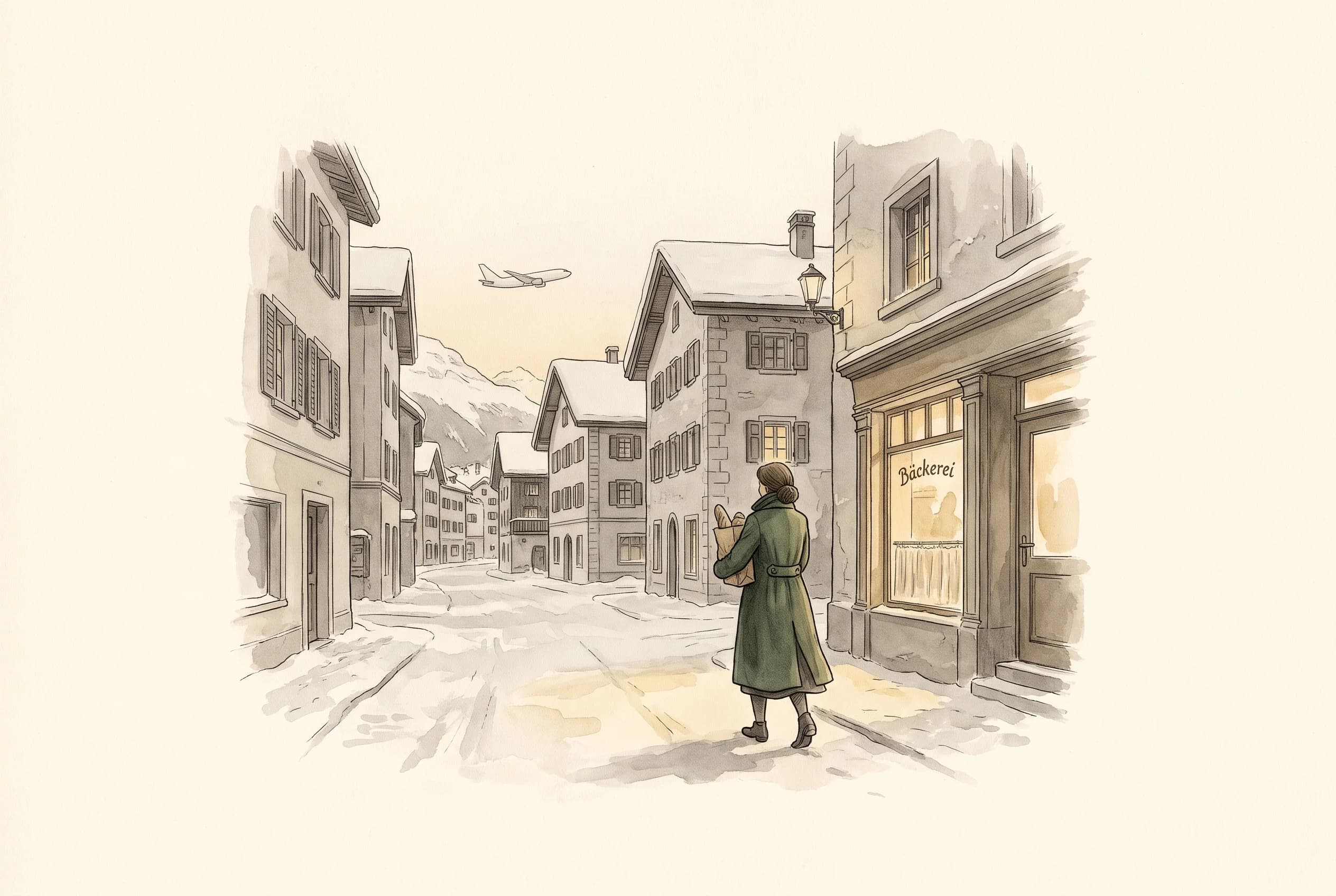
Four forty in the afternoon, on the Promenade. The light has gone the colour of weak tea and the shop windows are warmer than the sky. A woman in a loden coat crosses from the bakery holding a paper bag with both hands, nods at a man she has clearly known for forty years, and neither of them stops. Snow is packed hard along the gutters. Somewhere above the village a church bell marks the quarter hour and nobody looks up. A car passes at walking pace. Then nothing, for a long minute, except the sound of someone scraping a step.
A private jet to Gstaad means landing at Geneva (GVA), Bern (BRN) or, for smaller aircraft in suitable conditions, the Saanen airfield (LSGK) a few minutes from the village itself, then finishing by road or helicopter through the Saanenland. Gstaad is the Alpine address that stayed quiet on purpose: low chalets, no high-rise, no logo culture on the slopes, and a social code that treats noticing someone out loud as poor manners. Atljet market data for October 2026 puts a Light Jet from Paris Le Bourget to Geneva at roughly 55 minutes block time, estimated at €6,400 to €7,800 one way, per aircraft.
A private jet to Gstaad means landing at Geneva (GVA), Bern (BRN) or, for smaller aircraft in suitable conditions, the Saanen airfield (LSGK) a few minutes from the village itself, then finishing by road or helicopter through the Saanenland. Gstaad is the Alpine address that stayed quiet on purpose: low chalets, no high-rise, no logo culture on the slopes, and a social code that treats noticing someone out loud as poor manners. Atljet market data for October 2026 puts a Light Jet from Paris Le Bourget to Geneva at roughly 55 minutes block time, estimated at €6,400 to €7,800 one way, per aircraft.
What makes Gstaad the quietest address in the Alps?
Gstaad is quiet because it was built to be, and because the people who return each winter have agreed to keep it that way. The valley is narrow and wooden. Buildings stay low and horizontal, roofs weighted with snow, facades dark with age rather than stain. There is no tower, no skyline, no architectural gesture asking to be photographed. Walk the length of the Promenade and the most conspicuous thing you will see is a horse.
The second reason is social and harder to explain to someone who has not felt it. In other Alpine resorts, arrival is a performance: the watch, the fur, the table by the window, the deliberate pause in the doorway. Here the performance is reversed. The most senior person in the room is often the one in a twenty year old sweater with a dog at their feet, and the correct response to recognising a famous face is to look away and keep talking. Discretion is not a service the hotels provide. It is the condition everyone accepts, every day, including the people who could afford to ignore it.
The third reason is simply time. Families have come here for three and four generations. The children of the regulars ski with the children of the shopkeepers. A chalet changes hands slowly, often within the same circle, and the village absorbs newcomers at its own pace, which is roughly the pace of a glacier. Nobody is unwelcome. Nobody is fussed over either. For people exhausted by being interesting, that indifference is the luxury.
The rarest thing money can buy in the Alps is not a view. It is the certainty that nobody in the room is going to mention you later.
Atljet Editorial
How do the regulars actually spend a winter afternoon?
Slowly, and with a great deal less skiing than outsiders expect. The regular's day begins late by mountain standards, somewhere after nine, with coffee taken standing up and a long look at the sky. The decision about where to go is made from a terrace, not from a map. If the light is good on the Wispile side, they go there. If it is flat, they do not go at all, and the morning becomes a walk along the valley floor instead, boots on packed snow, the Saane running black between white banks.
The skiing itself is unhurried and sociable. Two or three runs, taken well, with a guide who knows which slope holds its snow after a warm week and which chairlift fills at eleven. Then the long lunch, which is the real event: a mountain restaurant with a wood stove, a table booked since October, a bottle of something local, two hours that become three. The afternoon dissolves. Nobody checks a phone at the table, which is less a rule than a habit nobody can remember acquiring.
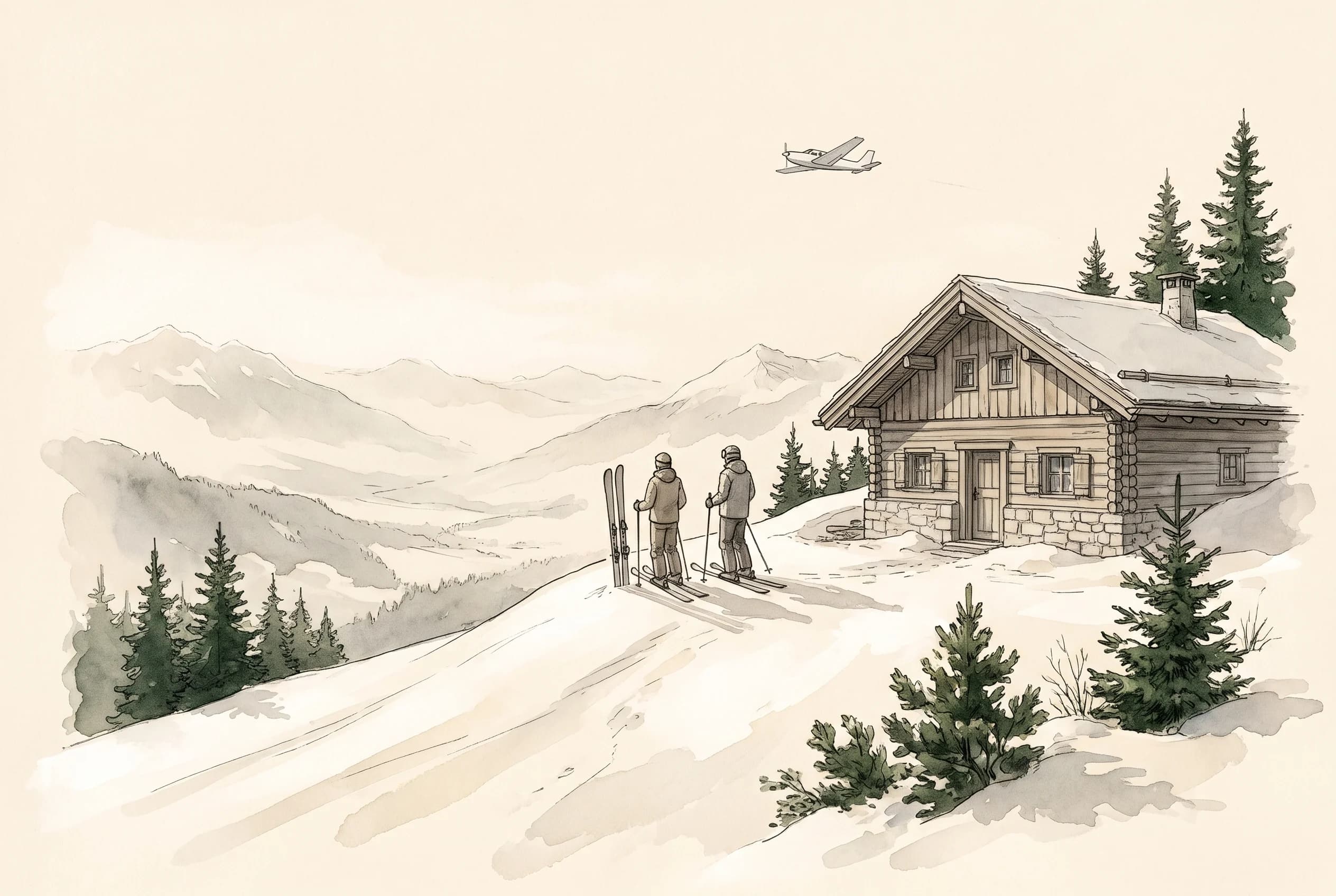
The walk back into the village happens as the light goes, between four and five, and it is the hour the whole day was arranged around. The valley turns blue. Windows come on one at a time along the hillside. People move at the speed of conversation. Children are collected from ski school. It is the closest thing the Alps have to the Italian passeggiata, performed in snow boots by people who would be appalled to hear it described as a ritual.
Where does the discreet still go to eat and be left alone?
Not to the terrace with the best view, which is the first thing worth understanding. The seasoned visitor eats at the back, in the second room, at the table that the house keeps for people who come every year. Reservations are made in October through a concierge or a chalet manager who has a relationship with the kitchen, not in December by a stranger on a telephone. This is not snobbery. It is arithmetic: the village is small, the good rooms are smaller, and the tables were spoken for before you thought of the trip.
The eating divides into three moods. There is the mountain lunch, which is about cheese, altitude and the smell of a stove, and which should be long and unambitious. There is the village dinner, candlelit and carpeted, where a sauce takes three days and the wine list runs deeper than the room suggests. And there is the private dinner in the chalet, cooked by someone brought in for the week, served at a table of eight, which is what the regulars increasingly choose because it removes the last variable: the possibility of being seen. If you want a published opinion on where the kitchens are serious, the MICHELIN Guide covers the valley.
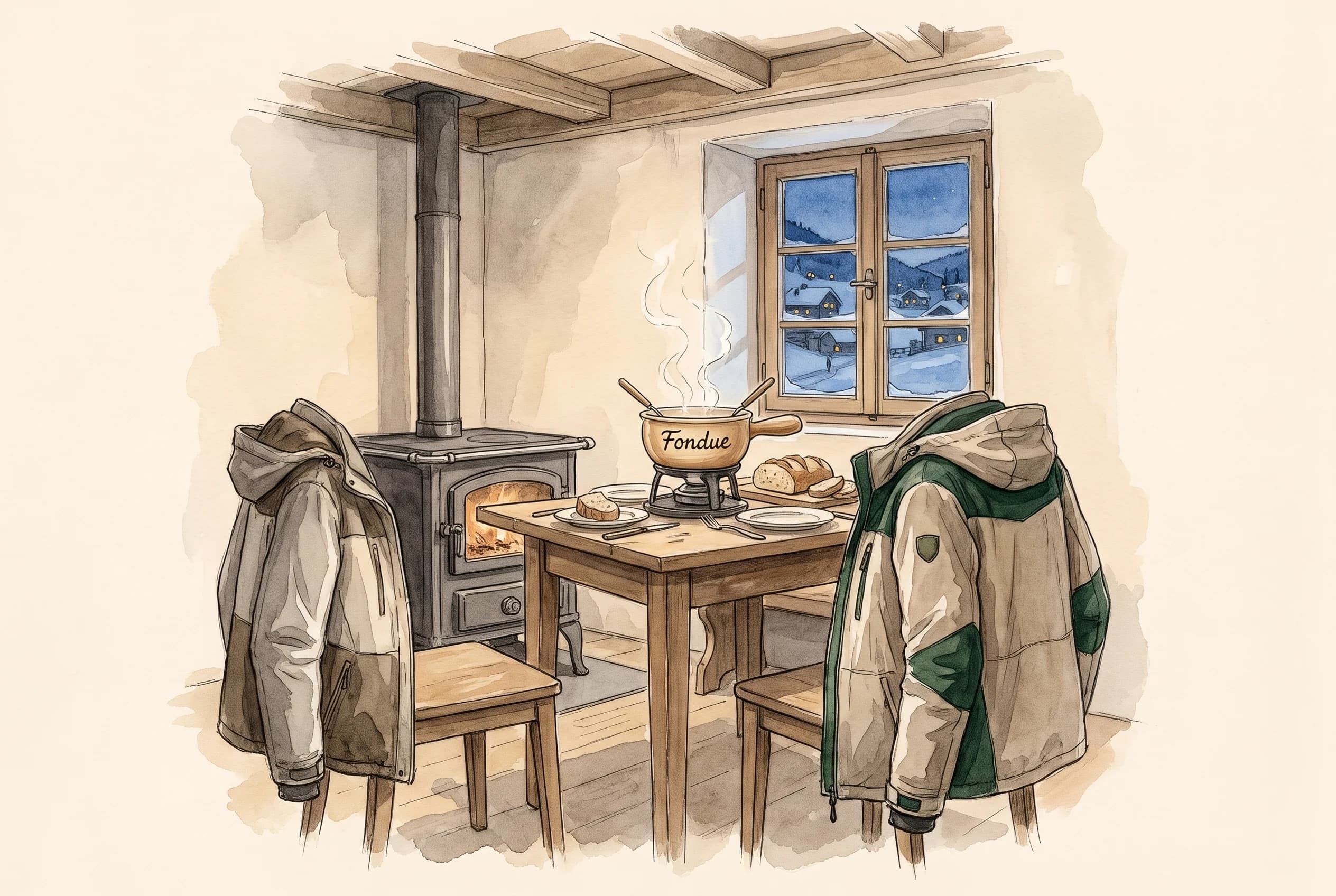
Fondue deserves its own paragraph because it is the one dish in Gstaad that is genuinely communal and genuinely unglamorous. It is eaten in the late afternoon, in a room too warm, by people in half their ski clothes. It takes an hour, nobody is in charge of it, and the conversation it produces is better than anything a tasting menu has ever generated. The regulars treat it as the valley's handshake.
The Atljet Edit
Five choices that define a winter week here, each one about time rather than spectacle.
- The horse-drawn sleigh at dusk, Saanenland: booked for four o'clock, blankets over the knees, the valley going blue around you and no engine noise at all.
- A private ski guide for the week, Gstaad: not for difficulty but for timing, because knowing which slope holds light at two is worth more than knowing which is steepest.
- A cheese cellar visit by appointment, Saanen valley: the alpine dairies open their maturing rooms privately, and the smell alone explains how this valley has eaten for generations.
- The master tailor or jeweller seen by appointment, Promenade: doors unlocked for one visitor at a time, fittings in a back room, nothing wrapped in a branded bag.
- The late walk after nine, Gstaad village: once the last visitors have left, the Promenade empties entirely and belongs to whoever is still awake.
What is the right way to spend the hours between slopes and dinner?
Doing nothing, properly, is the most underrated skill the valley teaches. The hours between five and eight are not a gap to be filled. They are the point. Boots come off in a warm room. Someone lights the fire, badly, and someone else fixes it. There is a sauna, taken without ceremony, and a shower, and the particular pleasure of putting on a cashmere sweater over skin that has been cold all day. The light outside goes from blue to black and nobody draws the curtains.
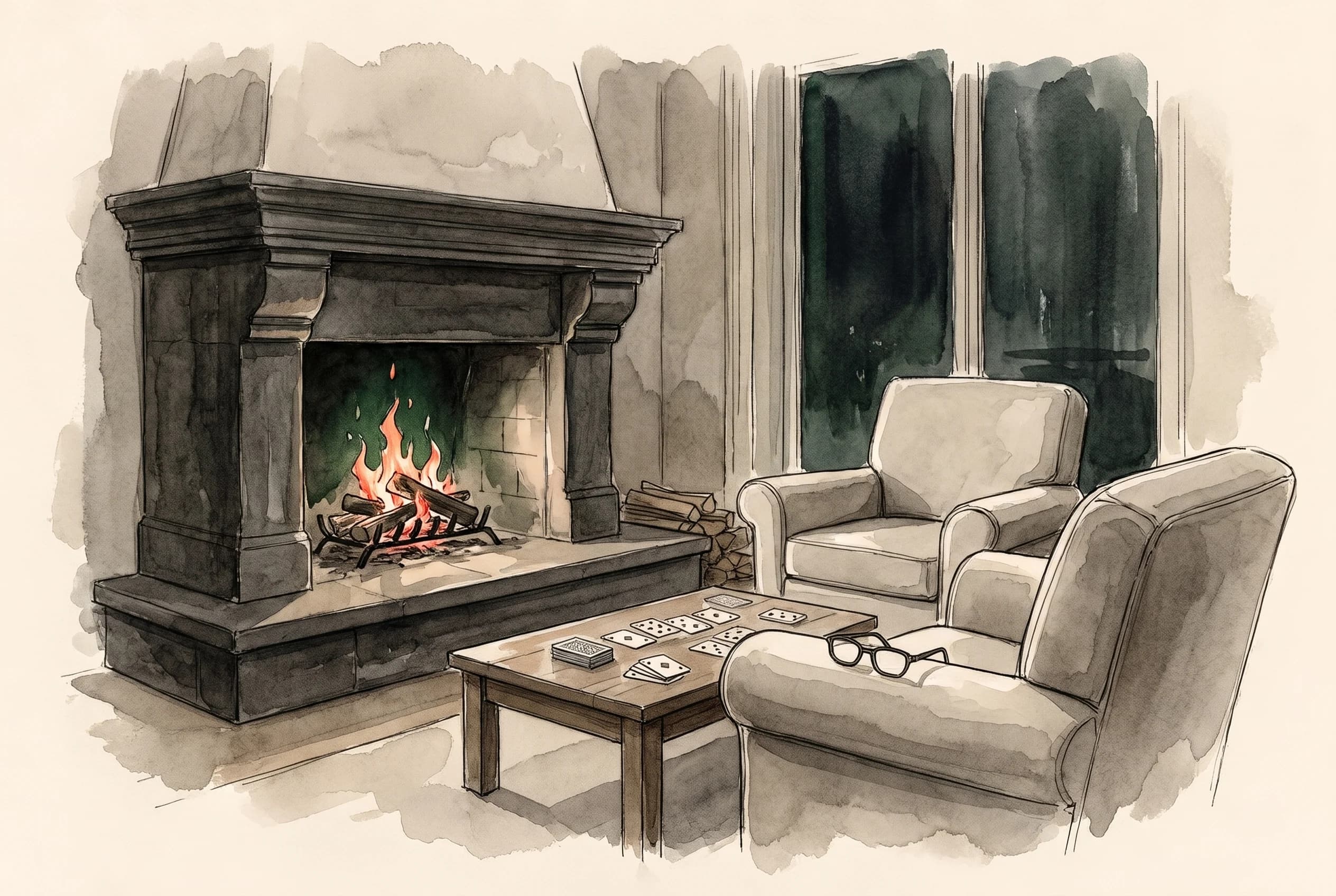
What happens in these hours is mostly conversation, of the slow kind that only occurs when nobody has anywhere to be. A drink is poured at six. Children appear, are fed earlier, disappear again. A deck of cards comes out. Somebody falls asleep in an armchair for twenty minutes and is not teased about it. The chalet staff, if there are any, work around this with the invisibility that is their whole art: the fire is fed, the glasses are refilled, the ski boots are dried, and none of it is announced.
This is also the hour that separates the people who understand Gstaad from the people merely visiting it. The visitor fills the gap with an activity, a spa booking, a drive to somewhere else. The regular lets it stay empty. By the time dinner is called, at eight thirty or nine, the day has been long enough to feel like three, and the mountain, which was the official reason for coming, has become almost incidental.
How do you take a private jet to Gstaad without being seen arriving?
By choosing the gateway that suits the aircraft rather than the one that looks closest on a map. Geneva (GVA) is the dependable year round answer, with a drive of about ninety minutes through the Pays d'Enhaut and some of the best windscreen scenery in Switzerland. The airport's own information is at Geneva Airport. Bern (BRN) is smaller, calmer and closer in temperament, a civilised arrival into the Bernese Oberland, with details at Bern Airport. Saanen (LSGK) sits on the valley floor minutes from the Promenade and suits smaller aircraft when weather and daylight allow, a judgement made the day before, not a promise made in October.
Atljet market data for October 2026, one way and per aircraft, estimates a Midsize Jet from London Farnborough to Geneva at €10,500 to €13,100 with about 80 minutes block time, and the same class from Paris Le Bourget to Geneva at €7,600 to €9,300 in roughly 53 minutes. From Milan Linate, a Light Jet to Saanen is estimated at €4,900 to €5,900 for about 37 minutes. These are market estimates, not quotes: you pay for block time, routing, winter weather, positioning and the aircraft itself, which is why the same leg moves between December and March. The destination's official information is published by Gstaad Saanenland Tourismus.
| Route | Class | Block time | Estimate, one way, per aircraft |
|---|---|---|---|
| London Farnborough (FAB) to Geneva (GVA) | Midsize Jet, Citation XLS | 80 min | €10,500 to €13,100 |
| London Farnborough (FAB) to Saanen (LSGK) | Light Jet, Citation CJ3 | 88 min | €9,000 to €11,400 |
| Paris Le Bourget (LBG) to Geneva (GVA) | Light Jet, Citation CJ3 | 55 min | €6,400 to €7,800 |
| Paris Le Bourget (LBG) to Bern (BRN) | Midsize Jet, Citation XLS | 55 min | €7,800 to €9,600 |
| Milan Linate (LIN) to Saanen (LSGK) | Light Jet, Citation CJ3 | 37 min | €4,900 to €5,900 |
| Zurich (ZRH) to Saanen (LSGK) | Very Light Jet, Citation Mustang | 35 min | €4,100 to €4,700 |
| Dubai (DXB) to Geneva (GVA) | Ultra Long Range, Gulfstream G550 | 372 min | €94,000 to €127,500 |
Airports
Arriving by air
There is no airport in Gstaad itself in the full sense, which is part of its character. Geneva and Bern are the dependable jet gateways, Saanen is the short, weather-dependent privilege for smaller aircraft, and Zurich works well when the trip begins elsewhere in Switzerland. The Atljet flight desk arranges the last stretch too, chauffeured car or helicopter into the valley, on the same booking.
- GVA
- Geneva AirportThe dependable year round choice, about ninety minutes by road into the Saanenland, and the right call in uncertain winter weather.
- BRN
- Bern AirportCalmer and closer in temperament, a civilised entry into the Bernese Oberland for small and midsize aircraft.
- LSGK
- Saanen Airfield, GstaadMinutes from the Promenade and suited to smaller aircraft when conditions and daylight allow, confirmed the day before rather than promised in advance.
- ZRH
- Zurich AirportUseful when the journey begins elsewhere in Switzerland or connects onward, with a short repositioning leg into the valley.
| From | Distance | Light jet | Midsize jet | Heavy jet |
|---|---|---|---|---|
| London (FAB to GVA) | 431 nm (798 km) | 1h 25m, €8,800 to €11,100 | 1h 20m, €10,500 to €13,100 | 1h 16m, €15,600 to €20,700 |
| Paris (LBG to GVA) | 234 nm (433 km) | 0h 55m, €6,400 to €7,800 | 0h 53m, €7,600 to €9,300 | 0h 51m, €11,100 to €14,500 |
| Zurich (ZRH to GVA) | 132 nm (244 km) | 0h 40m, €5,100 to €6,200 | 0h 38m, €6,000 to €7,200 | 0h 37m, €8,600 to €11,100 |
| Milan (LIN to GVA) | 149 nm (276 km) | 0h 42m, €5,300 to €6,400 | 0h 41m, €6,300 to €7,600 | 0h 39m, €8,900 to €11,600 |
| Dubai (DXB to GVA) | 2,816 nm (5,215 km) | Not non stop | Not non stop | 6h 27m, €71,600 to €97,700 |
The last stretch is where the arrival is either elegant or merely efficient. A chauffeured car from Geneva climbs steadily for an hour and a half, and in good weather the road itself is worth the time. In winter, when the passes are slow, a helicopter transfer from Geneva or Bern turns the same journey into a short hop over white ridgelines and sets you down within minutes of the chalet. The Atljet flight desk arranges that last stretch too, car or helicopter, on the same booking as the point to point flight itself. Readers planning a wider Alpine winter may also want our pieces on St Moritz and Samedan and on landing at Courchevel.
There is a final courtesy worth knowing, and it costs nothing. Arrive without a convoy. The valley notices scale long before it notices names, and three black vehicles outside a chalet say more about a guest than any interview ever could. One car, one driver, bags brought in quietly. It is the local manners, and it buys a week of being left entirely alone.
At four forty, the woman in the loden coat is still crossing the Promenade, and the man still does not stop. That is the whole proposition. Gstaad does not promise that you will be treated as someone important. It promises the opposite, and means it, and that is why the same people have been coming back for sixty winters to be nobody in particular for a week.
Questions people ask
- What is the best airport for a private jet to Gstaad?
- Geneva (GVA) is the dependable year round choice, about ninety minutes by road into the valley. Bern (BRN) is closer in spirit and quieter in traffic. Saanen (LSGK) sits minutes from the village and suits smaller aircraft when conditions allow, which your flight desk will confirm the day before.
- Is there a private airfield in Gstaad itself?
- Effectively yes. The Saanen airfield (LSGK) lies on the valley floor a short drive from the Promenade. It is small, seasonal in character and dependent on weather and daylight, so it is treated as a privilege rather than a plan.
- When does the Gstaad winter season really begin?
- The village wakes in mid December, holds its breath over the holidays, then settles into its best weeks in late January and February, when the light lengthens, the snow is reliable and the crowd has thinned to the people who come every year.
- Why is Gstaad considered the most discreet Alpine resort?
- Because discretion is enforced socially rather than advertised. The architecture stays low, the shops stay small, the regulars do not photograph each other, and a visitor who behaves otherwise is quietly, permanently uninteresting to everyone who matters.
- How much is a private flight from London to Gstaad's gateways?
- Atljet market data for October 2026, one way and per aircraft, estimates London Farnborough to Geneva at €10,500 to €13,100 in a Midsize Jet, about 80 minutes block time, and London Farnborough to Saanen at €10,900 to €13,500 in the same class.
Questions on this guide? The flight desk answers within the hour.
Request options